
home
visitor info
press
contact  
Sierra County Recreation and Tourism   New Mexico Tourism


fwd backtrack
about Sierra County
link to a Sierra County map
Click for Truth Or Consequences, New Mexico Forecast
     
Aldo Leopold Wilderness Ghost Towns State Parks:
Caballo Lake State Park Hillsboro    Caballo State Park
Civilian Conservation Corps (8M pdf) Hot Springs in T or C    Elephant Butte Lake State Park
Chloride Kingston    Percha Dam State Park
Cuchillo Lake Valley Spaceport America
Elephant Butte (City of) Monticello Truth or Consequences
Elephant Butte Lake State Park Percha Dam State Park Williamsburg
Engle Placita Wireless internet - where to find it
Geronimo Trail National Scenic Byway Rio Grande Winston
Gila Wilderness Sierra County "Day Trips" booklet  


Day Trips booklets - link to pages


Additional information on sites around the county may be found in our Day Trips booklet.

Day Trips booklets - link to pages


   It was wide and deep and crooked, that cañon. My side of the basin was wavy; north of the cañon-crack it rose in benches; and ‘way beyond and above the last bench was a half-circle of misty pinky granite knobs and spikes and spires, notched and jagged, domes and turrets and things.

—Eugene Manlove Rhodes, The Bird in the Bush (1917)


go to top

Geronimo Trail Scenic Byway


The Geronimo Trail Scenic Byway ties together Sierra County's many charming locales and offers sweeping panoramas, breathtaking vistas, and intimate corners of beauty. Jagged and defiant craggy peaks give way to tranquil valleys and small villages left back in time. Empty, quiet, pristine, teeming with wildlife and flowers, the Byway traverses a landscape resonant with history and mysterious in its majesty. From the Jornada del Muerto (Journey of the Dead Man), the roughest and deadliest part of the historic Camino Real (the main route north from Mexico City to Santa Fe), the Byway rises to more than 8,200 feet in the Black Range Mountains.  Emory Pass Vista in the Black Range Scenic Area reveals a magnificent view to the east for more than 40 miles.   


go to top


The Gila Wilderness and the Aldo Leopold Wilderness offer 3 million acres of wild nature in which to camp, hike, and enjoy the silence and clean air of this uncharted territory. Gila National Forest - Black Range, near Kingston New Mexico

The Aldo Leopold Wilderness, named for the early naturalist and preservationist, runs along the Continental Divide.

The Gila Wilderness was the first national wilderness areaofficially dedicated—and it remains the largest primitive area still maintained.  With just 3.2 people per square mile, you can get lost in Sierra County's dazzling countryside.

The warm springs Apaches, including the famous leaders Mangas Coloradas, Victorio and Geronimo, called these rugged mountains home. Their territory included much of southwest New Mexico and southeast Arizona, including all of Sierra County.
 

More info is available at the US Forest Service /Black Range District,
Gila National Forest Office:

1804 N Date Street
T or C, NM 87901
(505) 894-6677  


go to top

 Rio Grande

The Rio Grande bisects the county.  Originating more than 12,000 feet above sea level as a clear, snow-fed stream in the San Juan Mountains of Colorado, it pours through the Rocky Mountains and descends across steppes and deserts, feeding two vast lakes; Elephant Butte and Caballo Lakes draw thousands of visitors each year, making Sierra County the ultimate recreational destination. Ideal for boating, fishing, and water sports of all kinds, the lakes and waterways of Sierra County offer peak recreation opportunities in a setting of pristine beauty.


go to top

Elephant Butte Lake State Park

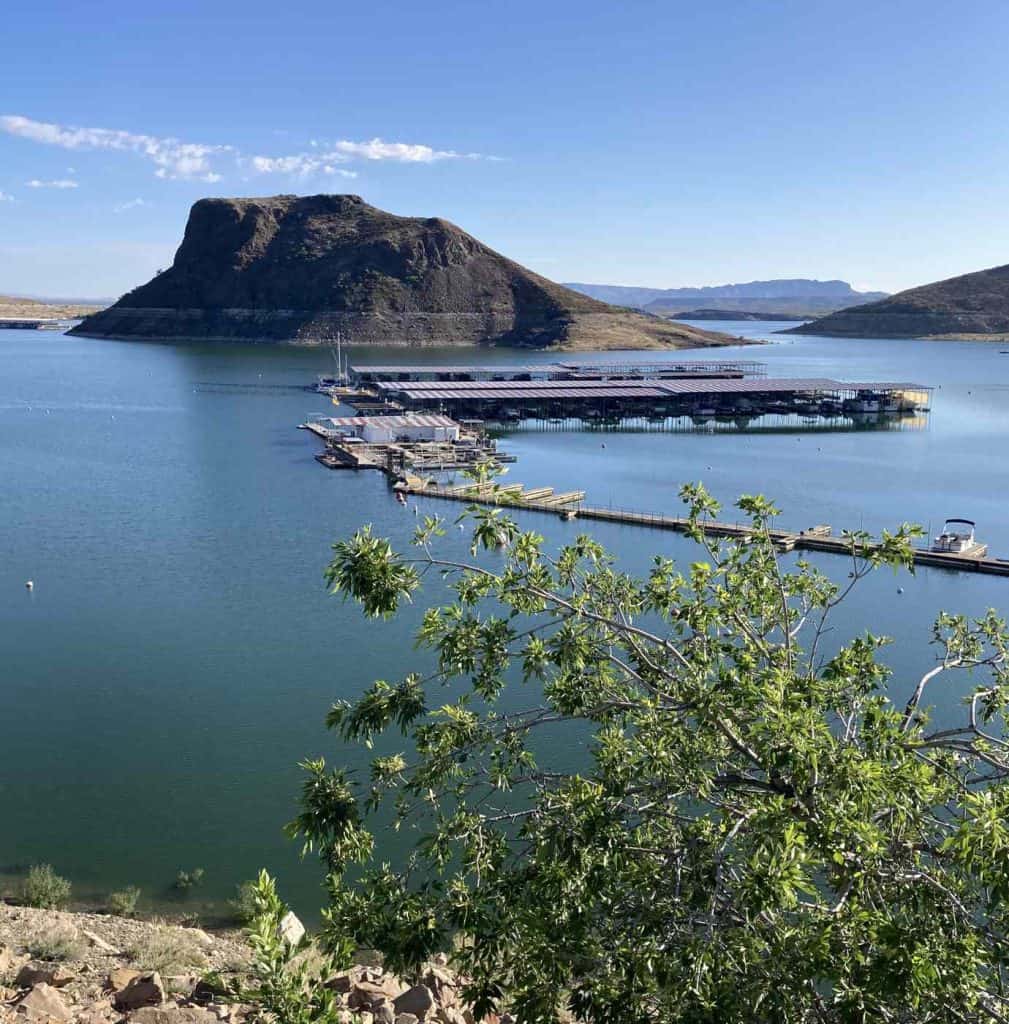
aerial view of Elephant Butte Lake and Elephant Butte Lake State Park, Elephant Butte New Mexico

Sierra County's largest state park provides an array of camping and RVing opportunities in a magnificent setting of deep blue water and dramatic mountain peaks.  

A fisherman’s paradise known for record-breaking black, white, and striped bass, as well as crappie and bluegill, the park offers three marinas to serve boaters, miles of trails, sandy beaches, and magnificent views along its 43-mile length.  

The Dam Site Recreational Area, built by the Civilian Conservation Corps (CCC) during the 1930s, has been designated a Historic District.  The site retains the flavor of the lake's historic past and includes cabins, a restaurant, an RV park, rock-lined paths, and the charming Dam Site Lodge, housed in the old Administration Building dating from 1911.

~ Dam Site Marina ~
~ Marina del Sur ~
~ Rock Canyon Marina ~

~ ElephantButteLake.net ~


go to top

Caballo Lake's Palomino Campground

Caballo Lake and Percha Dam State Parks

Located 20 miles downstream from Elephant Butte, with the majestic Caballo mountains serving as their backdrop, Caballo Lake and Percha Dam include facilities for camping, RVs, boating, fishing, swimming, and hiking.

Caballo Lake and Percha Dam State Park Headquarters:
575-743-3942

At right: Caballo Lake's Palomino Campground


go to top

The City of Elephant Butte incorporated in 1998 asign for the City of Elephant Buttend is a growing resort and retirement community.  Elephant Butte offers superb RV accommodations, restaurants, hotels and motels, guide services, marinas, and watercraft rentals.  

The Elephant Butte Balloon Regatta, sponsored by the City of Elephant Butte, takes place the second weekend in September and includes balloonists, skydivers, and drag boats from around the state and nation.  Particularly festive is the Beachwalk Luminaria Festival and Floating Parade of Lights (2nd Sat. in December).  Literally thousands of luminarias Highway 195, City of Elephant Butte's main bywaymeander along a specially designed beach path that comes alive with campfires, music, and food provided by local area organizations and businesses.  This popular celebration at the Elephant Butte Lake State Park also includes a parade of illuminated boats and prizes for the most amusing and/or elaborately decorated watercraft and RVs.


~ link to Elephant Butte Chamber of Commerce ~
~ link to Elephant Butte Lake State Park ~


go to top

Truth or Consequences, once known as Hot Springs—and still America's most affordable Spa Town—is a small welcome to Truth or Consqeuences, New Mexicoresort town with one stoplight and a year-round population of slightly more than 8,000.  Situated off I-25 between Albuquerque and Las Cruces, this little town got its big name in 1950 as part of a publicity scheme to celebrate the 10th anniversary of Ralph Edwards’ hugely successful game show on NBC radio.  Edwards suggested that there might be a town in the United States that “liked and respected” the show so much that it would change its name to Truth or Consequences.  State Senator Burton Roach relayed the news to the Hot Springs Chamber of Commerce, and in a special city election, residents voted to adopt Truth or Consequences as their town's new name.  Edwards and his entire crew came to T or C (as it is affectioLas Palomas Fountain in downtown T or C, created by ceramist Shel Neymarknately called by New Mexico locals) in 1950 and aired a live, coast-to-coast broadcast of Truth or Consequences, the show, from Truth or Consequences, the town.  Edwards loved the town so much that he returned every year with his Hollywood friends for a Fiesta that is still celebrated today with classic small-town panache, featuring a parade; cowboy and motorcycle rodeos; a rubber ducky race and fishing derby; a salsa contest; golf and tennis tournaments; and a startling array of local musical talent.

Pictured at right: Las Palomas Fountain (artist: Shel Neymark) is an inviting feature of downtown T or C. Located next door to the Geronimo Springs Museum, the fountain provides a place for visitors to sit and relax while soaking their feet in the town's famous hot mineral waters. Ten historic bathhouses are within the historic hot springs district; a map showing locations is here.

~ link to Truth or Consequences Chamber of Commerce ~
~ link to information on hot mineral springs in TorC ~


go to top

Williamsburg's residential areaWilliamsburg: In 1949, three residential areas just southwest of and adjacent to Hot Springs (now Truth or Consequences) voted to incorporate as a village, named for its first mayor, Dr. Thomas B. Williams.  Dr Williams had also at one time been mayor of Hot Springs, and was later mayor of Truth or Consequences.  He was a very colorful character on the local political and social scene.

There was a sizeable increase in population in Williamsburg in 1950 after Hot Springs became Truth or Consequences.  Those dissidents who refused to live in a town named Truth or Consequences moved to the adjacent town to be outside the city limits of Truth or Consequences.  They voted to change the name of Williamsburg to Hot Springs, but it never caught on and about a year later the name was changed back to Williamsburg. The post office in Williamsburg was established in 1951.

The village has progressed with a modern municipal services complex, and utility services are provided for its residents through contracts with the City of Truth or Consequences.  There are several businesses near the I-25 freeway exit (75) at Williamsburg.  There is a small park on the west end of the village, two RV parks, several convenience stores with gasoline and diesel, and a long-established antique business.  Many of the residents are retirees who like the small village atmosphere.

The "old" state highway (187), a picturesque southbound route that serves as an alternative to I-25, is accessed via Williamsburg.  NM 187 is one of the routes of the Geronimo Trail National Scenic Byway.


go to top

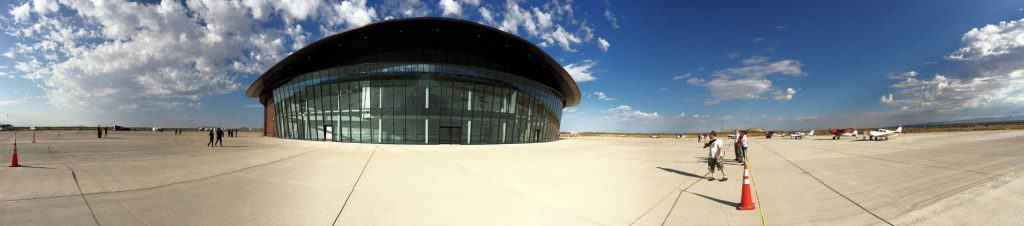
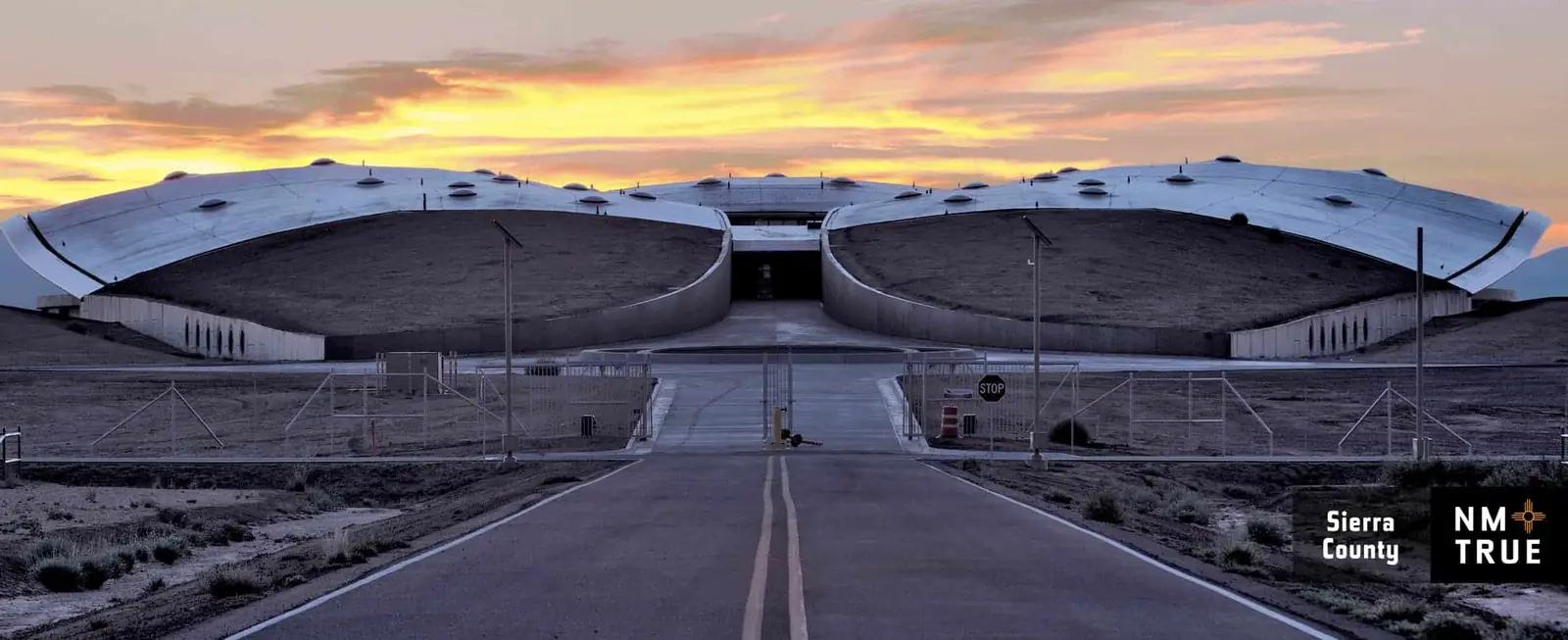
Spaceport America

spaceport america
"Southern New Mexico’s combination of low population density, controlled air space, excellent launch trajectories, and more than 4,000 foot elevation provide all the natural elements needed to establish a permanent and lucrative spaceport. Combine these naturally occurring components with the vision of community and political leaders throughout the state, and role of New Mexico as a leader in the space industry is assured."

- from the Spaceport America website


Click to read a story on the Spaceport that ran in the May 10, 2008 Washington Post.

Links to other Spaceport-related sites:

~ X Prize Foundation ~
~ Starchaser Commercial Space Access ~
~ Virgin Galactic ~
2006 launch at the proposed site of the New Mexico Spaceport
above: an early launch at the proposed site of New Mexico's Spaceport


Wireless internet is available in many of the county's hotels, lodges, and spas.

wireless internetT or C businesses offering wireless include Denny's Restaurant on the north side of town next to the Interstate, café BellaLuca in the heart of downtown, and the 4th Street Computer Lab, next door to the Civic Center on Fourth.

In Elephant Butte, try Big Food Express near the intersection of Warm Springs Road and Hwy 195.


Living Ghost Towns


Ho! For the Gold and Silver Mines of New Mexico    Fortune hunters, capitalists, poor men, sickly folks, all whose hearts are bowed down and ye who would live long, be rich, healthy, and happy; come to our sunny clime and see for yourselves!

Notice posted at Nutt Railroad Station to incoming miners and merchants in the 1880s


The Bridal Chamber, Solitaire, Silver Monument, Ready Pay, Opportunity, and other mines produced millions in silver and gold, creating a string of Sierra County boomtowns from the 1870s to the 1890s.  Before the gold and silver boom, the area that is now Sierra County was home to Apaches and other Native Americans, as well as Hispanic ranchers and farmers who built churches and buried their dead in cemeteries that stand as historic reminders of a vibrant past.  Next came the Buffalo Soldiers and army forts, the miners, the railroads and stagecoaches, the merchants, the cowboys and cattlemen, outlaws, the ladies of the evening, and the lawmen who became a part of the lore and history of the Old West.  The Geronimo Trail Scenic Byway meanders through these living ghost towns that are home to old-timers and newcomers alike who are restoring and revitalizing these historic locales with shops, museums, eateries, and other enterprises.  Day trips from T or C offer the adventurous traveler glorious scenery and fascinating people along the way.
 

~ link to Living Ghost Towns website ~


go to top


Chloride was founded in 1880. Englishman Harry Pye had discovered silver ore there in the late 1870s, and soon after Pye was killed by Apaches, word of the silver find got out. Despite the threat of Indian attacks Chloride grew to over 3,000 people. In its heyday it had nine saloons, a general store, a dry goods store, a millinery shop, a restaurant, a butcher shop, a candy store, a pharmacy, a Chinese laundry, a photography studio, a schoChloride New Mexico was once a booming mine townol, and two hotels.  The Black Range newspaper was printed in Chloride from 1882 to 1896. Of the nearly 500 surveyed mines and prospect holes in the Apache Mining District, a dozen or so made big mines, including the Silver Monument, the U.S. Treasury, and the St. Cloud, which is still in operation, though not mining silver.  The demise of Chloride began with the Silver Panic of 1893 and was hastened by the presidential election of 1896, which resulted in a drastic decline in silver prices.

Many of Chloride's original structures still stand.  The old Pioneer Store is now a museum; next door the former Monte Cristo Saloon and Dance Hall houses a gift shop and gallery featuring work by local artists. Both are open seven days a week from 10am-4pm. Harry Pye's cabin is available as a vacation rental. Other landmarks in this tiny town (population 11) include the 200-year-old Hanging Tree and Doodle Dum, the workshop of longtime resident Cassie Hobbs (1904–1989).  

(2 miles SW of Winston on Forest Road 226; driving directions)

~ link to The Pioneer Store Museum and other points of interest in Chloride ~


go to top


the old church in Cuchillo, New Mexico

Cuchillo, established by ranchers and farmers in the 1850s, was named for a nearby creek and a local Apache chief, Cuchillo Negro (Black Knife).  Midway between the mines at Chloride and Winston and the railroad at Engle, it flourished as a stage stop and trade center from the 1880s to the 1930s.  Charming original buildings still stand, including the Cuchillo Bar and Store, and San Jose Catholic Church, built in 1907.  Ritch's Pecans and Candy Shoppe, featuring handmade chocolates and pies, is open October through May, and the Cuchillo Pecan Festival is celebrated the last weekend in February.  

(15 miles NW of T or C on NM 52; driving directions)


go to top


approaching Engle New Mexico

Engle was founded in 1879 as a station on the Atchison, Topeka and Santa Fe Railroad. It became a thriving cattle town and shipping point for ore from nearby mines.  Construction of Elephant Butte Dam from 1911 to 1916 filled the town with people, but Engle declined after the dam was completed.  Though few people remain, the town is the headquarters of the historic Armendaris Ranch, and New Mexico’s renowned Gruet Winery grows some of its grapes in the region.  

(17 miles E of T or C on NM 51)

~ link to a webpage on Engle-as-Ghost-Town ~


go to top


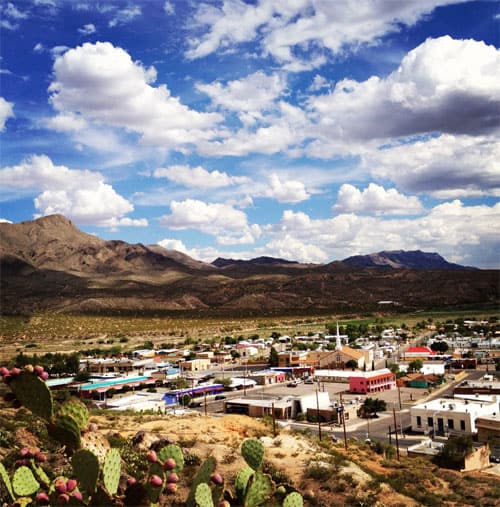
Hillsboro was born in 1877 when gold was found at the nearby Opportunity and Ready Pay mines.  Despite fierce Indian attacks, the town grew, becoming the county seat in 1884.  Area mines produced more than $6 million in gold Hillsboro NM - former mining town, today is an artist's and writer's enclaveand silver, and by 1907 the town had a population of 1,200.  Today, this charming, peaceful village of a hundred souls, which boasts flower-filled yards and old cottonwoods lining the main street, offers many enticements, including gift shops; restaurants; artist studios and galleries; the remains of the old county courthouse; the Black Range Museum; Union Church; and Our Lady of Guadalupe Catholic Church.  Hillsboro’s Heritage Day is held annually on the day before Mother's Day, and includes Home Tours and a Music Festival.   

Pictured at right: downtown Hillsboro.

(32 miles SW of T or C on NM 152; driving directions)

~ link to Hillsboro (hillsboronm.com) ~
~ another link to Hillsboro (hillsboronm.org) ~


go to top


Kingston was founded when a rich lode of silver ore was discovered at the Solitaire in 1882.  It grew rapidly and the old Percha Bank building in the former mining town of Kingston, New Mexicowas the largest town in the territory—and one of the wildest in the Wild West.  The town soon offered all of the trappings of civilization and culture.  Numerous hotels played host to the likes of Mark Twain, Butch Cassidy and the Sundance Kid, and Black Jack Ketchum.  Stage lines served all major routes, and the town supported twenty-three saloons,some of which advertised fresh oysters 24 hours a day!  The town also had 14 grocery and general stores; a brewery; three newspapers; and an Opera House where the Lillian Russell Troupe once performed.  Albert Bacon Fall and Ed Doheny of the Teapot Dome Scandal got their start in Kingston.  

From those glory days, the old Assay Office and the remains of the Victorio Hotel have been renovated as private residences.  The Black Range Lodge, a bed and breakfast, offers accommodations in a setting of massive stonewalls and log-beamed ceilings constructed from the ruins of what once was Pretty Sam's Casino. Some Kingston residents offer straw-bale and natural building workshops. Visit www.landerland.com and www.builderswithoutborders.org for more information.

(9 miles W of Hillsboro on NM 152; driving directions)


go to top


Lake Valley was named for ancient lakebeds nearby.  Founded in 1878 with the discovery of siLake Valley, home to The Bridal Chamber Minelver in the area, the town moved twice before settling at its present site when the Bridal Chamber Mine was discovered in 1882.  The subterranean mine produced 2.5 million ounces of silver ore so pure it was shipped unsmelted to the U.S. Mint.  A stage stop and railhead, Lake Valley grew to 4,000 people, with saloons, churches, newspapers, a school, stores, and hotels to serve them.  Like the area’s other gold and silver boomtowns, the devastating silver panic of 1893 wiped out the town, while a fire destroyed Main Street in 1895.  Lake Valley is a true ghost town (the last permanent residents left in 1994), and a walking tour of the site reveals a chapel, several old homes, the cemetery, and the old schoolhouse (dating from 1904), which is open to the public during the day, with BLM caretakers on site to answer questions. (17 miles S of Hillsboro on NM 27)

~ link to a webpage on Lake Valley-as-Ghost-Town ~


go to top


the old church in Monticelllo, New Mexico

Monticello was founded by ranchers and farmers in 1856 as Cañada Alamosa (Cottonwood Canyon).  In 1881 its first postmaster, Aristide Bourguet, renamed the town that was located not far from the headquarters for the Warm Springs Apache Agency.  Built in a square around a plaza in order to protect residents from attack, the town features old adobe homes that have been restored by new residents.  Mass is still said at historic San Ignacio Catholic Church, built in 1867, and the local cemetery has graves dating from the 1800s.  

At right: Monticello's church

(25 miles north of T or C on NM 142; driving directions)


go to top


livestock grazing in a field near Placita, New Mexico


Placita (Little Plaza) was founded by the Sedillo family in the 1840s. San Lorenzo Catholic Church (built in 1916), the schoolhouse, a dance hall, and some old homes still stand.  

(2 miles south of Monticello on NM 142; driving directions)


go to top


Winston New Mexico's General StoreWinston (first called Fairview) was settled in 1881 by miners who found nearby Chloride "too rowdy." It had a school, bars, a newspaper, horse races, and featured plays and songfests at Cloudman Hall (named for the local butcher).  Miner, businessman, and future state legislator Frank H. Winston, who came to town in 1882, owned several businesses and generously gave credit to customers in hard times.  When he died in 1929, the town was renamed in his honor.  While Winston flourished until the silver panic of 1893, today only a few families remain.  Winston's home and carriage house still stand, along with the 1890 schoolhouse, the old post office, and other historic buildings.  The town, home to the Winston Store, the Diamond Bar, and the Black Range Camp, hosts the Winston Spring Festival the first Saturday in June.  

(38 miles NW of T or C on NM 52; driving directions)

~ link to a webpage on Winston-as-Ghost-Town ~


Photographs on this page courtesy of Judd Irish Bradley, Moshe Koenick, Rebecca Speakes, and Gina Deeter.

Historical information courtesy of LaRena Miller, Geronimo Springs Museum, Truth or Consequences, and Rural Economic Development Through Tourism (REDTT); additional information courtesy Percha Bank Museum and Black Range Lodge. Paid for in part by Lodger’s Tax.


top of page
  home
visitor info
press
contact